Flashback
Our lives were simple before Wikipedia, the Internet, and all these digital gimmicks. I remember when, somewhere around the beginning of the 2000s, my family got their first decent internet connection. Though DSL had been promised to us by Deutsche Telekom, our remote East-German village never got connected; we managed our humble lives with ISDN until I moved out. For that, we were early adopters for the region. “Internet pioneers”. It must have been around 2001/2002, classmates triggered me on the great film “A Beautiful Mind”. Local video stores were expensive, relative to income in general, and relative to my pocket money specifically. I bought the film much later. No option to buy a VHS or DVD, we had one or the other player, but relatively speaking these were less affordable than high-end camera equipment nowadays. Napster was a thing for us - Amazon was not.
It were those early days of “asyncronous streaming” when, at friends’ homes, I somehow got exposed to cinematic motion pictures with horribly bad image quality. I remember by hearsay that people would film movies in theatres with plastic video equipment (bless the nineties), which was impressive back then but would now be too shabby or sticky to even make it to a museum. Unstabilized frontrow-filmed footage, perspective distorted, colors washed, resolution a bare minimum.
Imagine my surprise when I bought a lens in 2025 which immediately brought back that Napster “character” to my own videos.
That lens is the Blazar Mantis Anamorphic 1.33x 35mm f/2.0.
You might feel that my experience report below is too negative. Actually, what you feel is just the honesty that many online reviews lack. I do not claim that you could not create good movies with the “Mantis”, by any standards you define as good. However, by my own standards and expectations, it was an utterly disappointing purchase. And therefore I decided to summarize my observations and reasons, together with some digital post-processing fixes.
Use Case
I have some ideas for short movies, but lack the time. I have a lot to say, but prefer dialogues, and would be no good for a vlogging influencer.
In the end, all I want to do with my newly acquired, video-centric equipment is to make good videos of my family. Family trips, kids stage performances, my own progress with music.
Domestic cinematography. No planning. Natural lights. Handheld. Random costumes, none ever approved by me. Efficient post processing. Limited sharing.
I did have a wonderful Nikon “hybrid” camera. However, on video occasions, I was dissatisfied with the manual focussing support (and therefore accuracy), with warping and glitching from inaccurate image stabilization, with slow read-out / rolling shutter artifacts, and mode limitations (e.g. lack of 10bit). I would like to have good videos, saw a few youtube channels which amazed me with their professional looking home video productions, and got hooked into this new branch of my hobby (though it is not entirely new - I have been drawn to videos professionally).
Having the “Mantis” now made it all to clear that I should better re-calibrate my ambitions towards the “cinematic”.
Image “Quality”
There is some linguistic misconception about what is meant by Image Quality. The quality of an image is clearly determined by its content, the artistic expression of the photographer, the emotions of the viewer.
However, being used to inexpensive manual focus prime lenses, I expected excellent sharpness from this (expensive) manual focus “cine” prime lens made by Blazar.
No matter how you set it, no matter how you turn it. This lens is not remotely “sharp”. I had to increase the focus peaking intensity to get any chance at manual focusing, because the softness on the back of the glass has so few contrasting features. At f=2.0, images and videos just look washed and hazy. When rolling focus through a plane, you see concentric circles of sharp areas like water waves rippling outwards: field curvature is enormous on this lens. Higher aperture values might be tolerable, but then the high ISO to compensate OR the motion blur from slow shutter are not. Granted, ISO noise is a camera characteristic, and motion blur a physical phenomenon. But this lens literally puts these image deficits right in your face.
Maybe I have just misunderstood cinematography. Some of the better influencers argue that good movies are all just about the lighting. Of course, when I can flood my scene with a ton of carefully placed light sources, `f8.0, ss1000, ISO 64` is mine. And in that condition, even a Blazar Mantis might produce a partially sharp image, occasionally.
Yet, although we handle a light source or two in my household - even a semi-professional one - those hacks are not generally available to me. I would like to film my family just where they are, outside of a studio.
Distortion
There is another aspect about which I am probably too sensitive: image distortion. Side track: I just learned that actual praying mantis have quite extraordinary vision in some aspects. They obviously have complex eyes, which are bulgy and omnidirectional and maybe anisotropic, and some crude neuronal system has to work with the distorted outcome. I suppose the “Mantis” has its name from the insect, which might be fitting in this regard.
Barrel distortion is immense on this Blazar lens. Not only that: the equivalent focal lengths are inaccurate. I compared photos from this lens to a “normal” 35mm lens. Obviously, it is anamorphic, so I do not fuzz about the width (though two youtubers mentioned that it is rather 1.38 or 1.40 than 1.33 squeeze factor). The Mantis also includes a similar or even slightly wider viewing angle at top and bottom. This might be good or bad. Compared to a real 35mm, you lose resolution, because the available pixels are used for more angles.
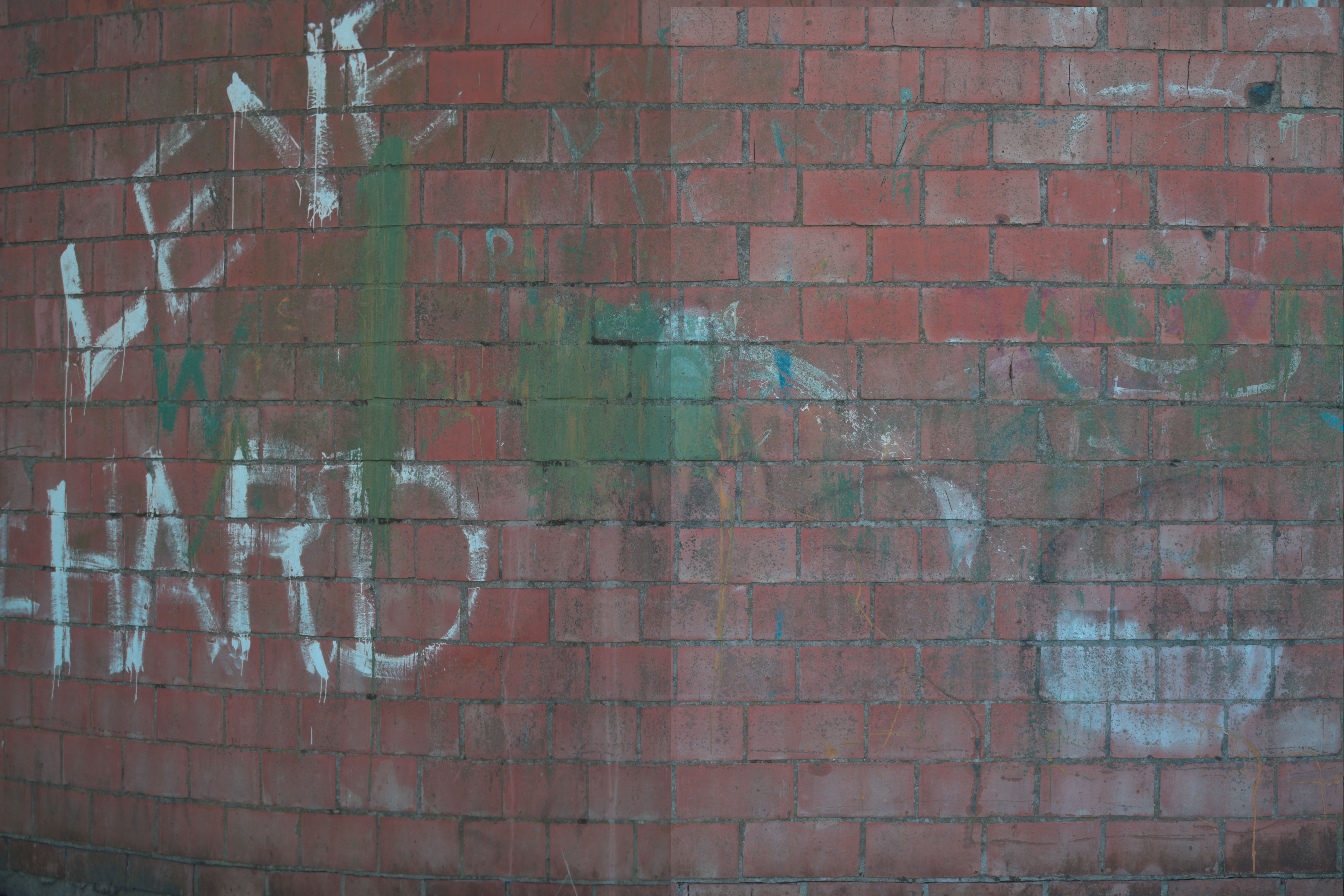
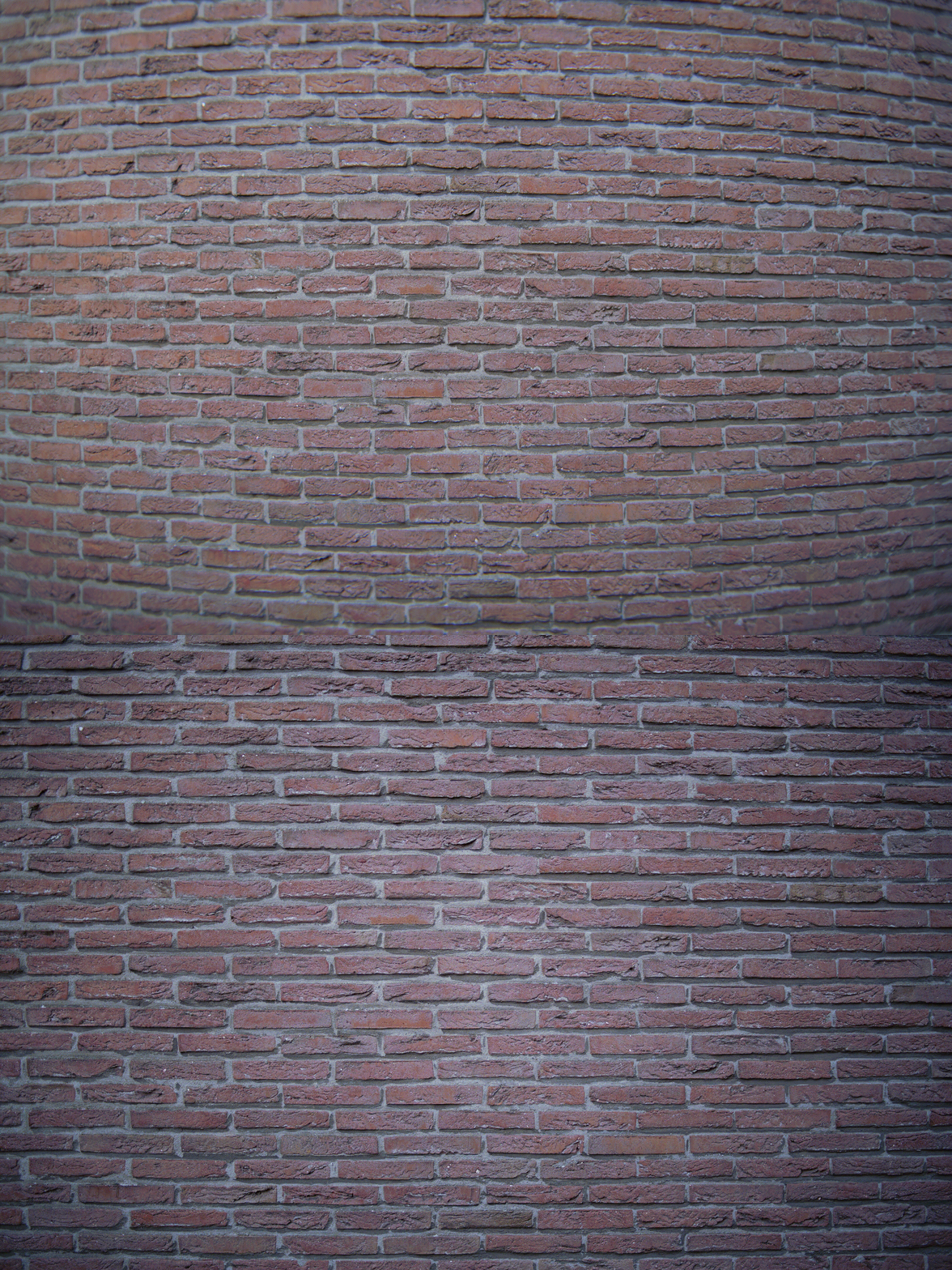
Do not get me wrong. I am used to worse distortion. Time-varying, inhomogeneous patterns - no problem. What annoys me is the workload for correcting it, and the waste of resolution which is shifted beyond the image edges and further deteriorating sharpness.
For videographers who like barrels, this might be a dream lens. (“Dreamy” is tech slang for “unsharp”.)
Build: Anisotropic Aperture, and Worse
The “Mantis” is built well, all metal and glass. (Only a Mantis shrimp could smash it.) It looks good. I don’t have complaints on that front or side. … or maybe, I do. There are distance markings. One side in units of feet, the other in meters. Values count up to “INF”, Infinity. But the focus throw does not stop there: you can focus beyond infinity. About twice infinity (unless the scale is log). That is either a physical paradox, or an utterly unreliable label. Craftsmanshit.
This is my first “cinema lens”. I went for this model because of the oval aperture, which was valued for its seemingly pleasant effect on bokeh.
I can confirm that it produces weirdly oval highlights of round LED lights in out-of-focus areas. And, as mentioned, this lens has a lot out-of-focus.
While testing it, I saw not a single horizontal flare. A glimpse of “stars” in the videos above, but no relevant flare of any color.
The 1.33x anamorphic squeeze helped me to understand the effect of de-squeezing, and I am glad to have added that to my repertoire. All this is about are aspect ratios and resolutions.
| purpose   | height | width | de-squeezed | aspect |
| Photo     | 4000   | 6000  | 8000        | 2.00   |
| Open Gate | 3968   | 5952  | 7936        | 2.00   |
| C4k (DCI) | 2160   | 4096  | 5461        | 2.53   |
| 4k UHD    | 2160   | 3840  | 5120        | 2.37   |
| 1080p     | 1080   | 1920  | 2560        | 2.37   |
However, thing is: de-squeezing is interpolation, and therefore costs resolution. Each pixel gets smeared out to its 1.33 (or 1.40) neighbors. Alternatively, if there is an effect of surrounding areas (thinking of spline interpolation), then this comes at the cost of contrast.
“Open gate” is a useless marketing term for describing that a video is recorded without a crop factor (which, thechnically, is useful). More useful on my Panasonic Lumix S5IIX is the ability to record pixel by pixel. Open gate is pixel by pixel for the whole sensor. Those are many pixels, and hence the camera gets to do some workout (rolling shutter). Anamorphic videos generally look wider than we are used to; on most screens, they are padded with black bars top and bottom. De-squeezed open gate is a little less extreme (see “aspect” in the table above). And rolling shutter is actually just a different affine transformation which could even be corrected if the movement has constant velocity.
On the more extreme end of aspect ratio, my S5IIX has “Cinema 4k” (C4k / DCI format).
“Cinema 4k”. Built in panorama mode. I doubt resolution is sufficient for a real cinema. The camera definitely brings no built-in cinema, just a tiny wiggly swivel screen (I am now one of those nerds who put a slightly larger screen on top of the cage). C4k is an approximately 2:1 imaging mode, also available for “pixel per pixel”, with much less rolling shutter than open gate. The video of the “Mantis” above was recorded in that mode. Note that the “pixel per pixel” modes, due to the crop, alter the field of view of a lens, and therefore equivalent focal lengths do not match any more: the height of 4k “pixel per pixel” modes is about half of the full sensor size, and thus your equivalent focal lenght almost doubles. If you have rather wide lenses available, that is fine.
But the C4k, with non-anamorphic glass, is just as good as a de-squeezed 4:3 anamorphic. Given the observed shortcomings of this particular lens, it is the far better alternative.
Summary and References
To summarize the characteristics of the Blazar Mantis:
- IQ: Image free of sharpness, even at ideal circumstances.
- Distortion: heavy barrel distortion and field curvature.
- Built: Inaccurate distance marks.
- Oval specular highlights - but not a tinge of horizontal flare.
- Outcome aspects fit the impractical high-res video modes.
- Questionable relevance of anamorphic squeezing.
I was surprised to arrive at the personal conclusion that some of the test videos presented here nevertheless have an aesthetic touch. However, this has all to do with the subject, the camera, and post processing. And diminishingly little with that lens.
Others certainly have pointed to these flaws. Or have they?
- “cammackey”
- “Anamorphic Cookbook”
- “The Aperture Life”
- “Brady Bessette” (Does not even have a fancy channel name.)
- (A beautiful short film; great scenery, great post processing; kudos.)
FOSS Saves the Day
Behold: kdenlive. Free and open source. Stable. Well maintained. Great software!
Please consider supporting the devs if you use it regularly.
For the colors, there is a cinematic LUT by the camera manufacture. No need to buy any LUT from anyone else.
The rest of the process is just a sequence of effects, dug up from the intimidating default effect library of the software (don’t worry, it has a search function).
First of all, even before importing clips, I set the resolution in the project settings to the target resolution, i.e. the de-squeezed width (see table above); reject the auto-message at clip import to the project bin. I then apply the following operations, conveniently stored with good default values in a custom effect.
Transform, allowing “distort” to fit the clip into the project resolution.Lens Correction (avfilter)to correct the barrel distortion with values I tested on the brick walls.Exposure(optional) to correct for my mistakes on camera. I found that this is better done before theApply LUTto bring the clip to Rec.709 with theVLog_to_V709_forV35_ver100.cubefile from Panasonic.ContrastandSaturation(optional) to tune the colors the way I like.Fill Bordersto straighten the top and bottom bar after barrel undistortion.
Then, the image can be rendered, and I currently (after some testing) prefer the SVT-AV1 codec for my videos. You will find that all videos shown in this notebook are rendered to “4k” height (2160 pixels), even if captured at larger resolution. All were processed in kdenlive with the same steps listed here (no exposure/contrast/saturation tweaks); on some I omitted the “fill borders” so the undistortion artifacts remain visible.
Summary
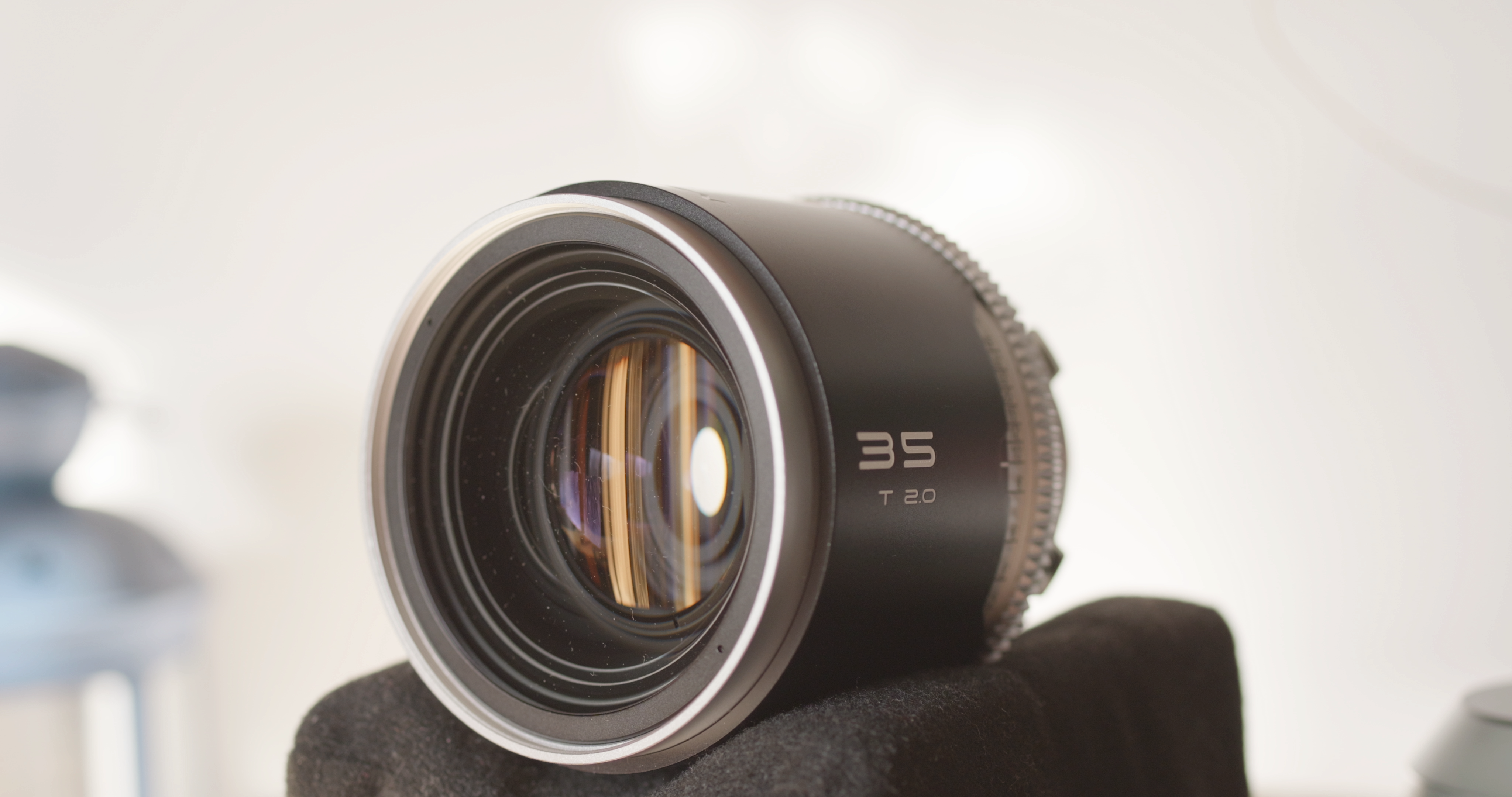
Lenses do not have “character”. You may argue that cats have character, and certainly octopusses, and that is about where it ends. Not lenses. Lenses have flaws. Either you can live with them, or you can learn to live with them, or not.
Lenses are creative tools, but artistic creativity can be added in post. Besides, I feel that my tolerance for the bohemian pleasure of grainy gritty motion pictures is rather limited when it comes to unique moments in the life of my kids.
The 35mm f/2.0 Blazar Mantis 1.33x Anamorphic offers so much “character” and “bohème” that professional second hand camera gear resellers do not even want to purchase it.

Those are the situations in which I tend to analyze my situation and recapture my mistakes. I hope you found them moderately insightful or amusing. Mind my naïve perspective: the “Mantis” inspired me to think and learn, which might be the best characteristic of this lens. And I have all respect for the achievement of the engineers who developed the Mantis. It is an ambitious move to realize that ovel aperture in a well built lens. The core of my criticism herein is thus directed towards the youtubers: the dishonest marketing of this device, and the consumerism which penetrates our digital information sources - perception also has to do with prior expectation.
Thank you for reading!